Artist-Educators, People, Video
One of the great living music masters of New Orleans music, Shannon Powell, suffered a stroke and he and his family need our help.
He has given so much to so many, especially young musicians. Let’s do what we can to pitch in and help.
Shannon Powell gives a lesson at the University of New Orleans
– Ken McCarthy
Jazz on the Tube
P.S. Our unique programming is made possible by help from people like you. Learn how you can contribute to our efforts here: Support Jazz on the Tube
Thanks.
Articles, Blog, People, Video
“Instead of staying three or four days in New Orleans, I ended up staying almost three weeks. And yeah, I started hanging out with the musicians, jamming, and yes, that’s how I fell in love with this city. I remember I went to Austin just to take a flight back.
I moved to New Orleans and a year later I went to Europe for a tour with my band. As soon as I started playing, everybody looked at me and said, “You changed, completely.” I didn’t see that actually, but I feel like when I moved to New Orleans, I removed a lot of chains. I became more free. I don’t calculate my music as much. I grew up in a culture that calculated music, and calculated notes. But here, everything is free. Everything is easy. I gained confidence. I began writing music here. Musicians are amazing here. There’s so, so much talent. And I’m so happy to be here, surrounded by these artists. Everything I write, it sounds beautiful, and that’s because of the generosity and the love and dedication that the musicians have here.
It’s an interesting thing because I don’t play jazz. I’m not a jazz musician. I’m a composer and most of my music, it’s a mixture of many influences, like North African and Middle Eastern, Spanish, Latin, and now there’s jazz. It became a part of my music. It gives my music a lot of breathing room. Freedom.”
– Mahmoud Chouki
– Ken McCarthy
Jazz on the Tube
P.S. Our unique programming is made possible by help from people like you. Learn how you can contribute to our efforts here: Support Jazz on the Tube
Thanks.
Artist-Educators, Jazz on the Tube Interview, People, Podcasts
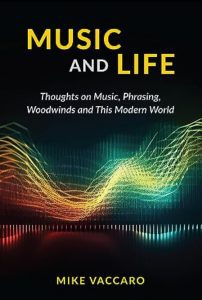
 Music and Life: Thoughts on Music, Phrasing, Woodwinds and this Modern World
Get the book here– Ken McCarthy
Jazz on the Tube
P.S. Our unique programming is made possible by help from people like you. Learn how you can contribute to our efforts here: Support Jazz on the Tube
Thanks.
Music credit: The Jazz on the Tube podcast theme song is “Mambo Inferno” performed by The Manhattan School of Music Afro-Cuban Jazz Orchestra conducted by Bobby Sanabria from the CD ¡Que Viva Harlem!
Blog, People, Producer-Presenters
– Ken McCarthy
Jazz on the Tube
P.S. Our unique programming is made possible by help from people like you. Learn how you can contribute to our efforts here: Support Jazz on the Tube
Thanks.
Chroniclers, Jazz on the Tube Interview, People, Podcasts, Producer-Presenters
Interview with Cisco Bradley
Download the mp3 here
This book is a model for jazz biography (and really for a biography of any creative person.) It not only documents the striving of an individual artist, in this case, William Parker, but also the dynamic communities that are essential for the development of artists.
I strongly recommend this book for music educators, music students, and anyone who wants to get “under the hood” of what goes into making an artist who succeeds in expanding the boundaries of the art.
Anyone interested in (or nostalgic for) the stunning flowering of creative music that took place in the 1970s when, believe it or not, rents in the East Village and Soho of Manhattan were low and musician-operated venues were abundant will also love this book.
– Ken McCarthy
Jazz on the Tube
P.S. Our unique programming is made possible by help from people like you. Learn how you can contribute to our efforts here: Support Jazz on the Tube
Thanks.
Music credit: The Jazz on the Tube podcast theme song is “Mambo Inferno” performed by The Manhattan School of Music Afro-Cuban Jazz Orchestra conducted by Bobby Sanabria from the CD ¡Que Viva Harlem!
Blog, People, Video
On this page a short but pointed tribute from Adam Mannes to what’s below the “tip of iceberg” of what we hear on records and see in live performances and on video.
It’s called “practice” but it really understates what’s involved.
Ongoing training, study, exploration, perfecting. For serious artists, it’s a never ending process and as fans we’re the beneficiaries.
Adam is one of many educators who is making music education available around the globe at a level that was previously unimaginable.
Note BOLD: Online education is a godsend, but for children it is NOT a substitute for a caring, inspiring LIVE teacher.
Some of my favorite resources for piano (a very short list)
Adam Maness and Open Studio
Jon Cleary – New Orleans piano and culture
Dan the Composer – Unique meditations on the art of playing the piano
Rick Beato – Musician, producer, educator
Oliver Prehn – Pianist and educator
Jonny May – Jonny May shows the tricks of the trade behind a number of piano styles
Jamey Aebersold – Not strictly a piano source, but you can’t talk about jazz education without Jamey. (See our podcast interview with him.)
If you have a hankering to learn some piano and are starting from scratch, I particularly recommend Jon Cleary and Oiver Prehn for to help you break the ice. The most important thing – more important than theory, practice, good form etc. – is to put your hands on the keys and discover that when you do, interesting things can and often do happen.
– Ken McCarthy
Jazz on the Tube
P.S. Our unique programming is made possible by help from people like you. Learn how you can contribute to our efforts here: Support Jazz on the Tube
Thanks.